
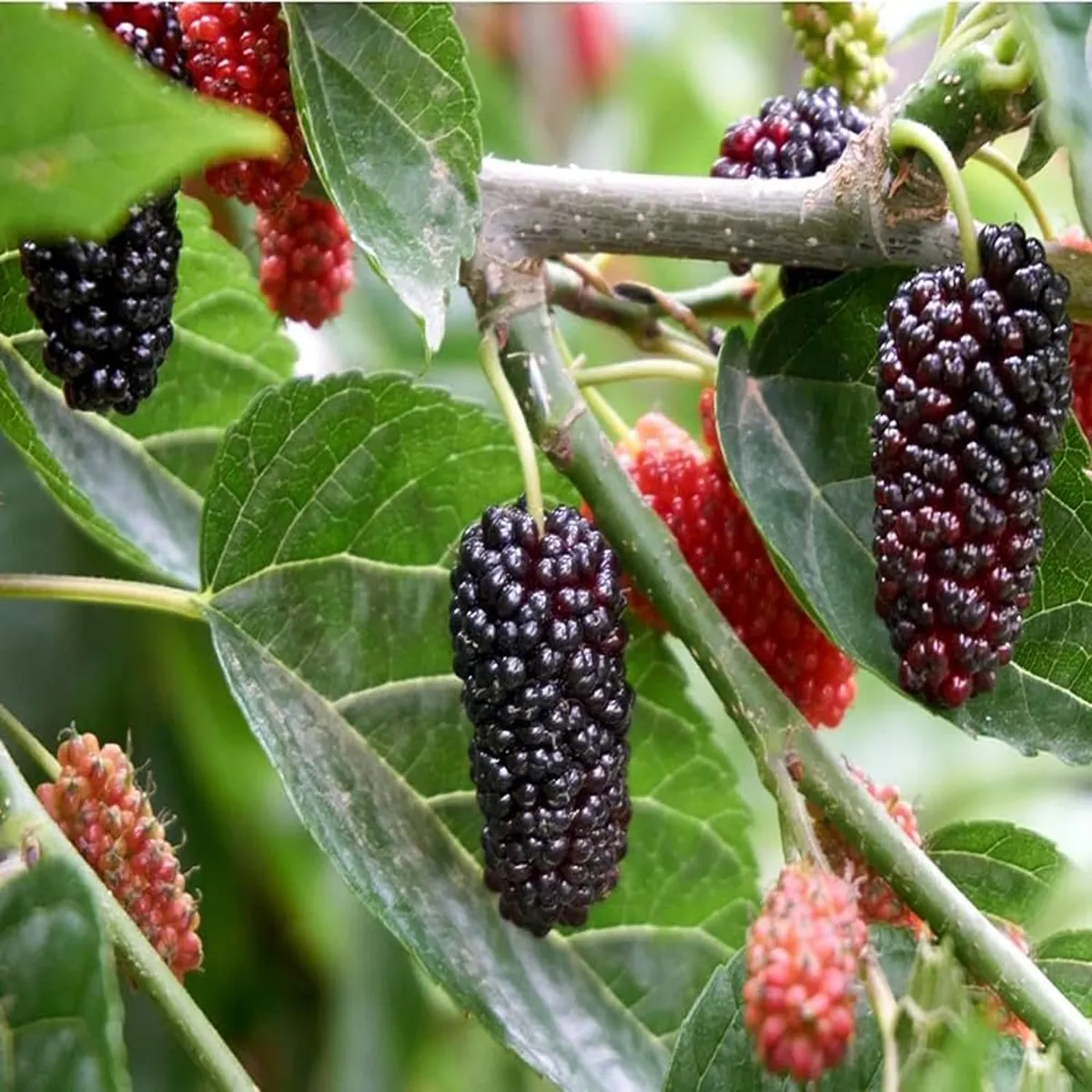
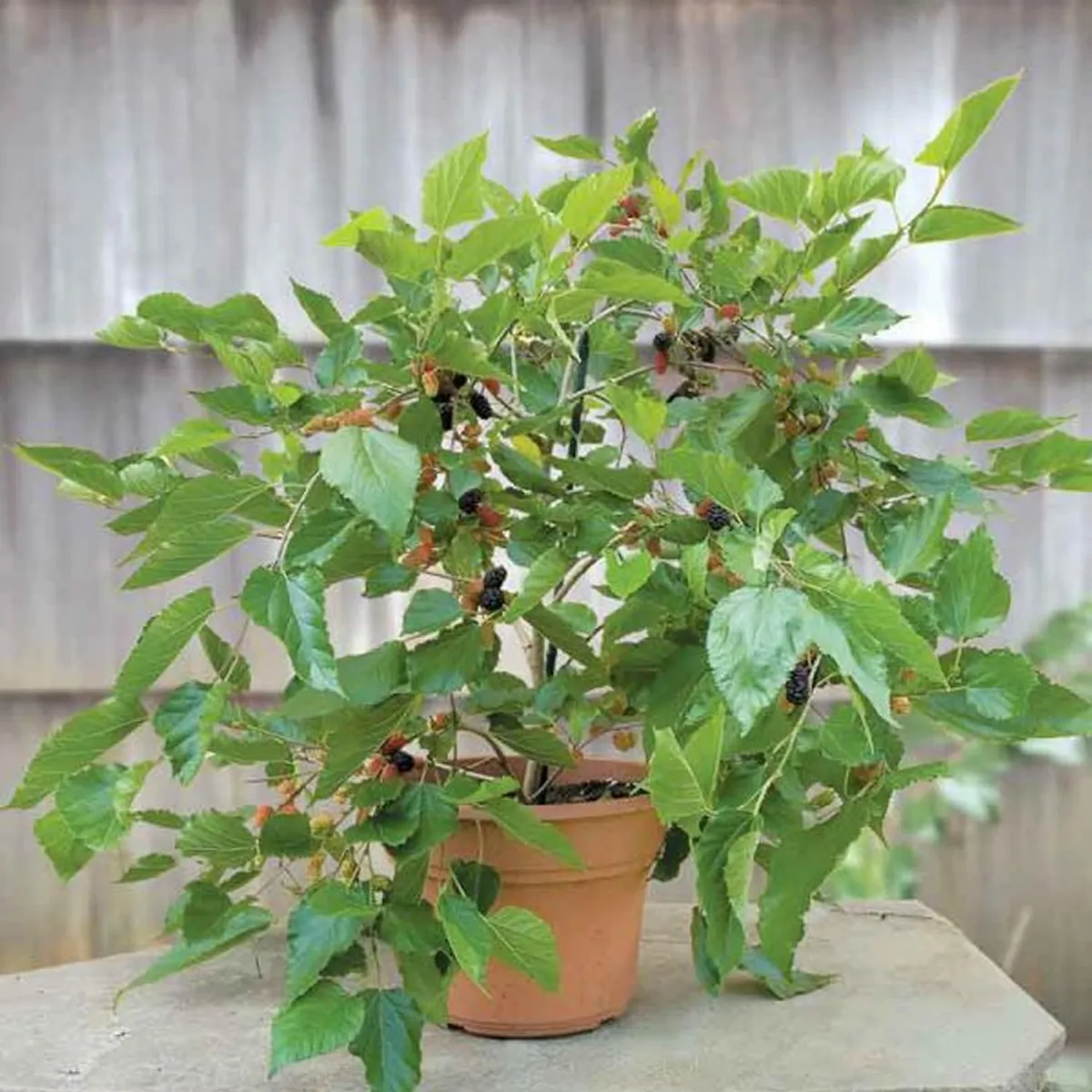
🌳 Mulberry Plant – Growing & Care Guide
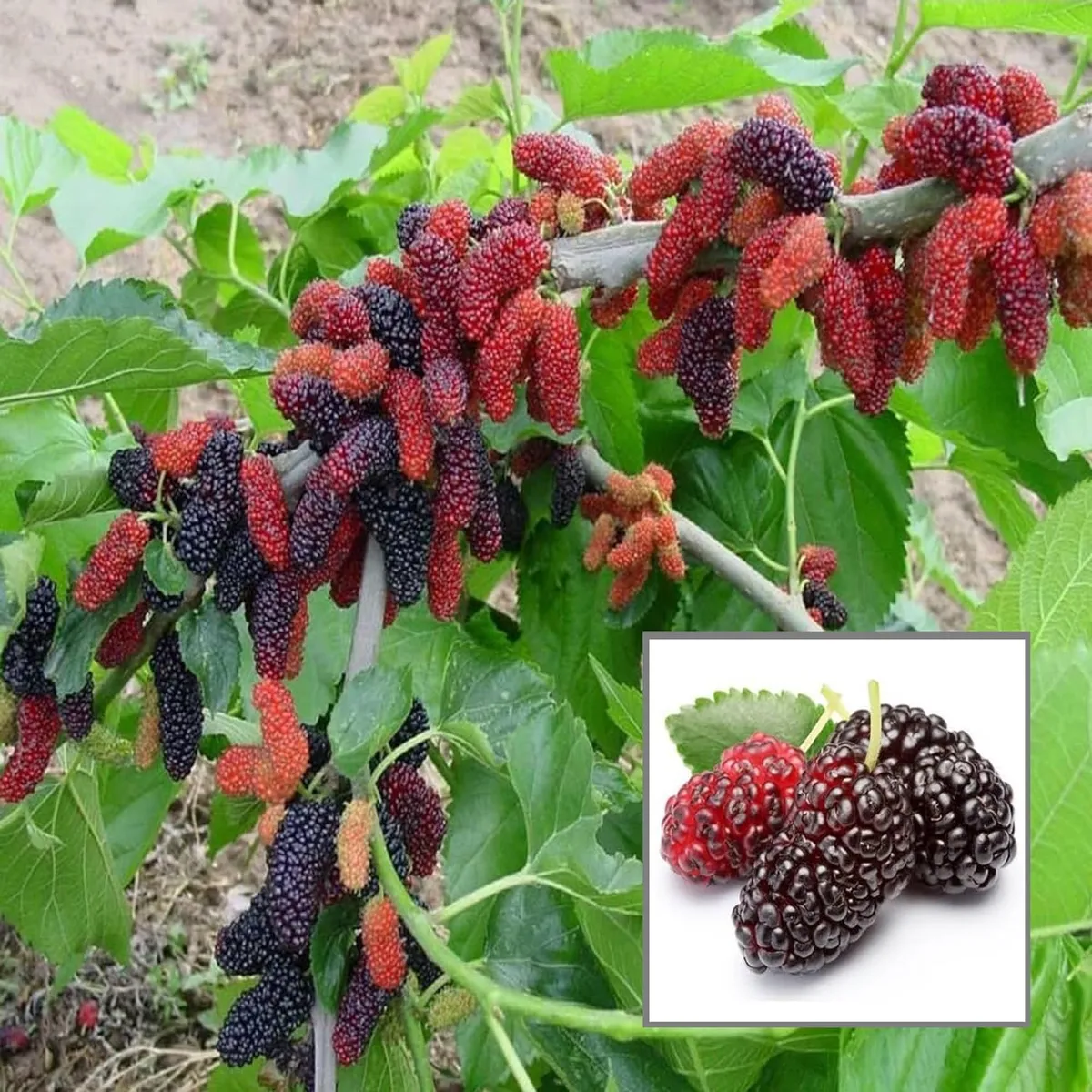
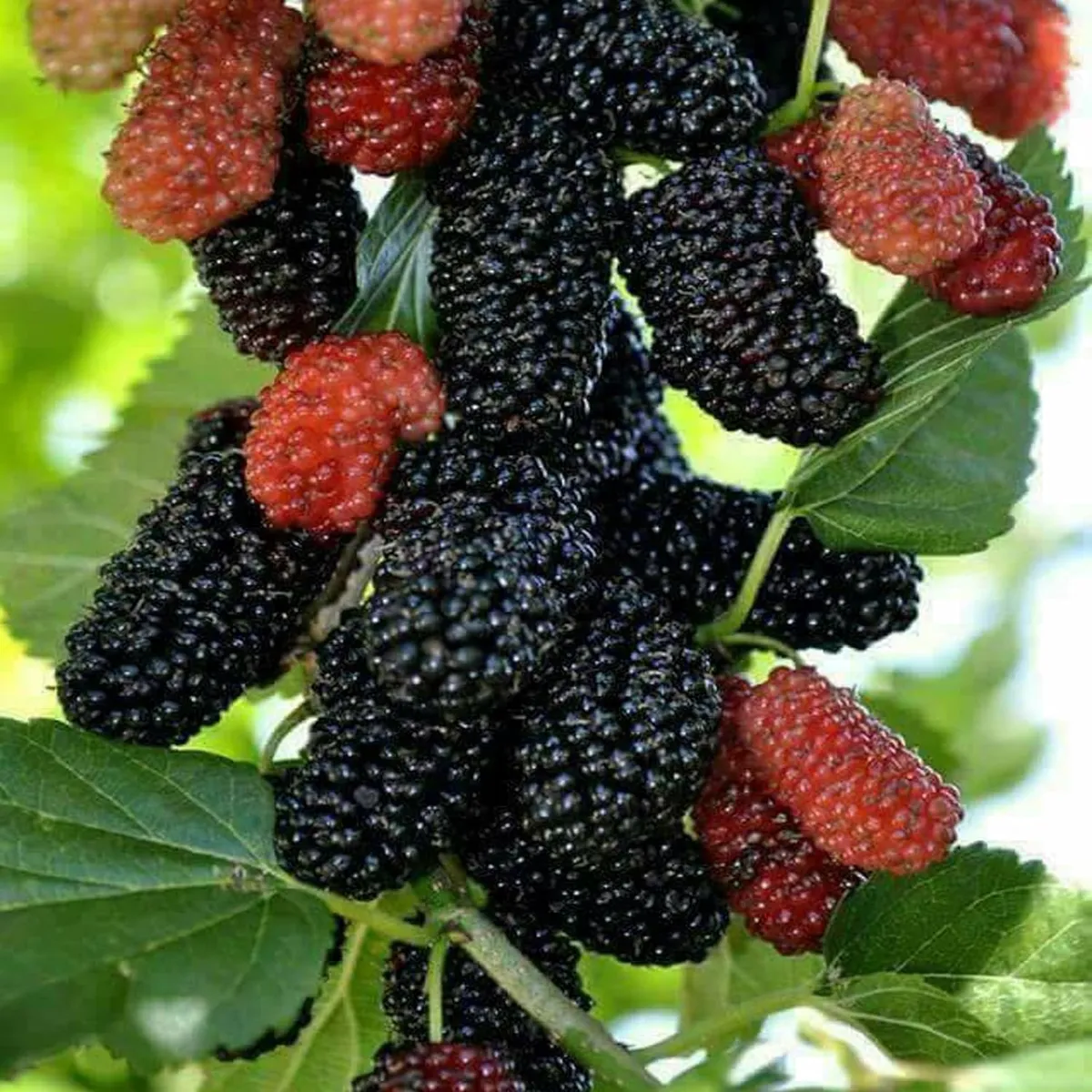
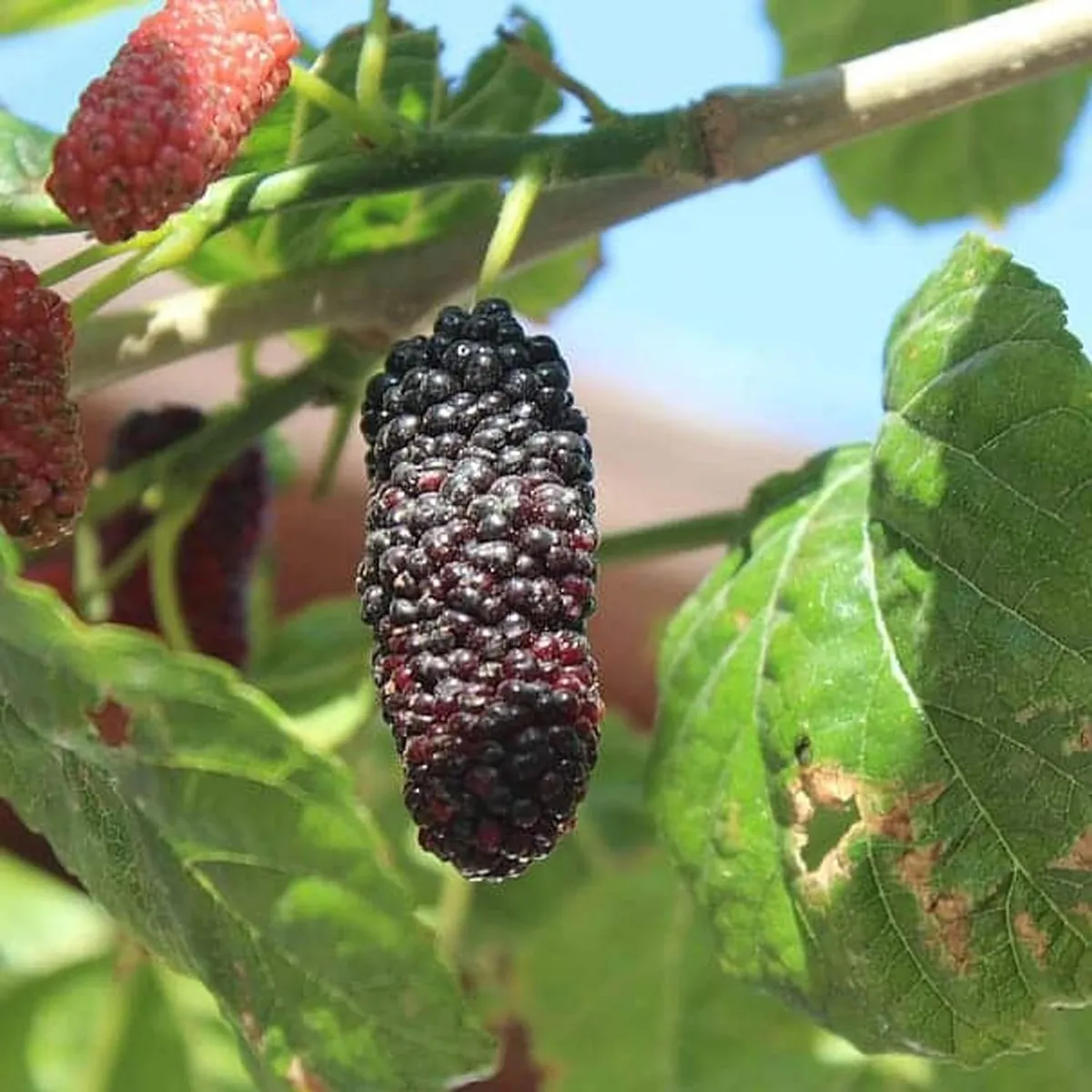
Mulberry is a fast-growing fruit tree known for its sweet, juicy berries and importance in sericulture (silkworm rearing). It is suitable for home gardens, farms, and commercial plantations.
Common cultivated species:
Morus alba (White Mulberry)
Morus nigra (Black Mulberry)
Morus rubra (Red Mulberry)
🌱 Growing Instructions
Climate: Thrives in tropical and subtropical climates.
Temperature: Ideal range 18°C–35°C.
Soil: Well-drained loamy soil with good organic content (pH 6.0–7.5).
Sunlight: Requires full sunlight for better fruiting.
Planting Distance: 3–4 meters apart (closer for leaf production).
Watering: Moderate watering during establishment; drought tolerant once mature.
Best Planting Time: July–September or February–March.
Fruiting Time: Starts fruiting in 1–2 years (grafted plants fruit earlier).
🌿 Care Instructions
Fertilizer: Apply organic compost twice a year. Add balanced NPK before flowering.
Pruning: Annual pruning improves fruit yield and keeps plant manageable.
Mulching: Helps retain moisture and reduce weeds.
Pest Control: Monitor for leaf spot, mealybugs, and caterpillars. Neem oil spray can be used.
Weeding: Keep base clean for healthy root growth.
🍇 Uses of Mulberry
Fresh fruit consumption
Used in jams, juices, and syrups
Leaves used for silkworm rearing
Rich in iron, Vitamin C, and antioxidants
Suitable for commercial farming and agroforestry